





Are pure sine wave inverters worth the extra cost for buyers?
- 1. What are the key differences between pure sine wave and modified sine wave inverters, and how do these differences impact appliance performance?
- 2. How does the efficiency of pure sine wave inverters compare to modified sine wave inverters, and what are the implications for energy consumption?
- 3. What are the typical price ranges for pure sine wave inverters, and how do these prices vary based on power output and features?
- 4. Are there specific appliances or devices that require pure sine wave inverters for safe and efficient operation?
- 5. What are the advantages and disadvantages of pure sine wave inverters compared to modified sine wave inverters?
- 6. How do pure sine wave inverters contribute to the longevity and reliability of electronic devices and appliances?
1. What are the key differences between pure sine wave and modified sine wave inverters, and how do these differences impact appliance performance?
Pure sine wave inverters produce a smooth, consistent waveform that closely resembles the power supplied by the electrical grid. This quality is essential for the optimal operation of sensitive electronic devices such as computers, medical equipment, and high-end audio systems. In contrast, modified sine wave inverters generate a stepped waveform that can cause electronic devices to operate less efficiently, potentially leading to overheating, increased wear, and reduced lifespan. For instance, appliances with motors may run hotter and less efficiently on modified sine wave power, consuming approximately 20% more energy.
2. How does the efficiency of pure sine wave inverters compare to modified sine wave inverters, and what are the implications for energy consumption?
Pure sine wave inverters typically achieve efficiency levels between 90% and 95%, while modified sine wave inverters range from 70% to 80%. This higher efficiency in pure sine wave models translates to less energy loss during the conversion process, making them more suitable for applications where energy conservation is a priority. For example, a 2000W pure sine wave inverter with 92% efficiency would require approximately 2,174W of input power, whereas a modified sine wave inverter at 75% efficiency would need about 2,667W for the same output, resulting in higher energy consumption.
3. What are the typical price ranges for pure sine wave inverters, and how do these prices vary based on power output and features?
The cost of pure sine wave inverters varies significantly based on power output and additional features. For instance, a 1000W pure sine wave inverter may cost over $160, while a similar modified sine wave inverter can be priced under $70. This price difference increases with higher power capacities. For example, a 2000W pure sine wave inverter may range from $300 to $1,000, depending on the brand and features.
4. Are there specific appliances or devices that require pure sine wave inverters for safe and efficient operation?
Yes, certain appliances and devices, especially those with microprocessors or sensitive electronics, require pure sine wave inverters to function correctly. These include:
Medical equipment
High-end audio systems
Laser printers
Microwave ovens
Some refrigerators
Using a modified sine wave inverter with these devices can lead to malfunctions, reduced efficiency, and potential damage.
5. What are the advantages and disadvantages of pure sine wave inverters compared to modified sine wave inverters?
Advantages of Pure Sine Wave Inverters:
Compatibility: Suitable for all types of appliances, including sensitive electronics.
Efficiency: Higher efficiency leads to less energy loss during conversion.
Appliance Longevity: Reduces wear and tear on devices, extending their lifespan.
Disadvantages of Pure Sine Wave Inverters:
Cost: Generally more expensive than modified sine wave inverters.
Size and Weight: Tend to be larger and heavier, which may be a consideration for portable applications.
Advantages of Modified Sine Wave Inverters:
Cost: More affordable, making them suitable for basic applications.
Size and Weight: Typically smaller and lighter, beneficial for portable use.
Disadvantages of Modified Sine Wave Inverters:
Compatibility: Not suitable for sensitive electronics and certain appliances.
Efficiency: Lower efficiency can lead to higher energy consumption.
Appliance Longevity: Can cause increased wear and potential damage to devices.
6. How do pure sine wave inverters contribute to the longevity and reliability of electronic devices and appliances?
Pure sine wave inverters provide a clean and stable power supply, which is crucial for the proper functioning of electronic devices. By delivering power that closely matches the grid's waveform, these inverters minimize electrical stress on components, reducing the likelihood of overheating and premature failure. For example, using a pure sine wave inverter can extend the lifespan of a laptop battery by 20%, potentially saving $120 over five years. Similarly, refrigerators powered by pure sine wave inverters experience a 40% reduction in compressor failures, saving $250 to $500 per repair.
In conclusion, while pure sine wave inverters come with a higher initial cost, their benefits in terms of efficiency, appliance compatibility, and device longevity often justify the investment, especially for users with sensitive electronic equipment.
For personalized recommendations and quotes tailored to your specific needs, please contact us at info@csinverter.com or visit our website at www.csinverter.com.


OEM & ODM Services
Can I order samples before production?
Yes, we offer sample evaluation and prototype testing.
Pure Sine Wave Inverters
What is the difference between a pure sine wave inverter and a modified sine wave inverter?
Pure sine wave inverter has an output waveform close to mains power with low distortion rate (<3%), which can be safely adapted to precision devices such as computers, medical instruments, and inverter home appliances; modified sine wave inverter has a notched waveform, which easily causes device heating, malfunction or damage, and is only suitable for simple devices such as bulbs and fans.
Can this inverter drive a 3P air conditioner and a refrigerator at the same time?
Yes. The rated power of a 3P air conditioner is about 2200W-2500W, and an ordinary double-door refrigerator is about 150W-300W, with a total power of about 2350W-2800W, which does not exceed the 3000W continuous power; and the peak 6000W can cope with the instantaneous startup impact of the air conditioner. When using, ensure the battery capacity is ≥200Ah (12V) to ensure battery life.
Modified Sine Wave Inverters
What is the function of the independent control switch?
The independent control switches for DC and AC can respectively control the on and off of DC and AC circuits, facilitating the separate management of power supply for different types of devices and improving power usage safety and flexibility.
Can I customize the logo?
Yes, OEM/ODM service is available.
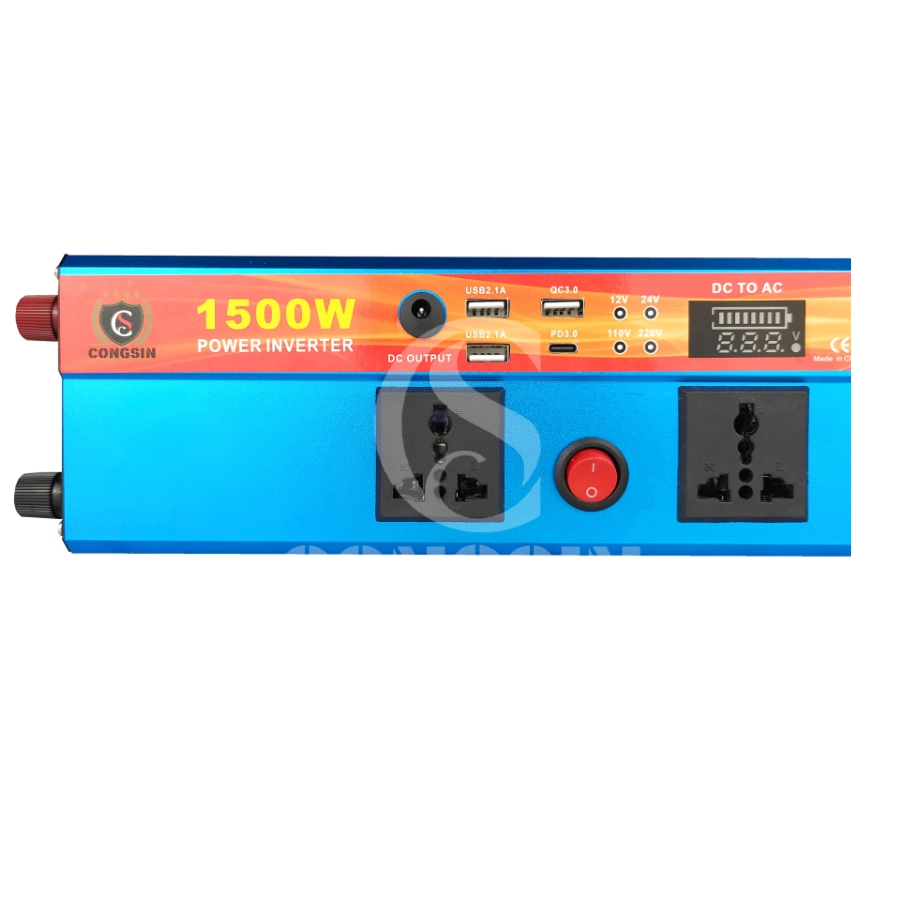
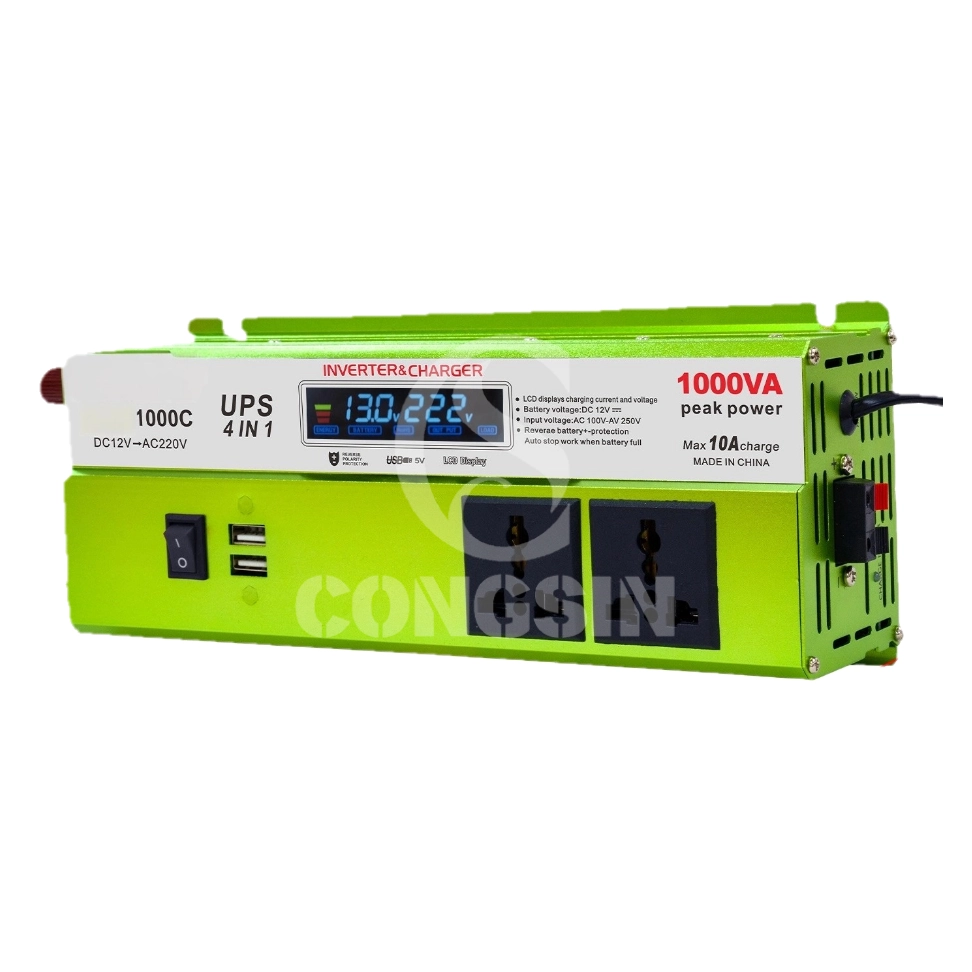
Our CS1000DDBC 1000W modified sine wave inverter is a professional power conversion device that converts DC 12V from batteries into AC 220V electricity. It is designed with user convenience in mind, featuring an LED display for real-time status monitoring, multiple charging ports (3 USB, 1 Type-C, 1 DC 12V) and two universal sockets to power a wide range of devices simultaneously. Its compact size (250×95×55mm) and lightweight design (NW: 0.84kg) make it easy to carry, ideal for outdoor activities, emergency home use, and on-the-go power needs.
Get in Touch with Our Team
You can also communicate with us directly through our online contact form. Please fill in the following information, and our team will contact you as soon as possible after receiving your message.

CONGSIN is a trusted OEM factory for power inverters, solar charge controllers, and DC converters. Reliable solutions for global B2B buyers.
 High Quality
 7/24 Service
 Guaranteed Warranty
© 2025 Congsin. All Rights Reserved.